A personalized journey to inner peace, clarity, & wellness
What is the Transcendental Meditation* technique?
TM* is an effortless meditation practice that’s taught one-on-one, evidence-based, and guaranteed.
Evidence-based benefits






Find an instructor
There are 170+ TM Centers in the U.S. where you can learn to meditate, and discover a deep inner peace.

“What is transcending?”
watch the video by Dr. Tony Nader, global leader of TM organizations

Why the TM technique is different
- ()
Personalized one-on-one instruction
Personally connect with a certified TM instructor and receive expert support during your whole journey.
- ()
Practice with no effort
Everyone can do the TM technique, even if you “can’t meditate.” There is no concentrating, no control of the mind, and no trying to “empty the mind.”
- ()
Guaranteed to work for everyone
Backed by the experience of millions of people and hundreds of research studies, we’re happy to offer a satisfaction guarantee.


Find an instructor
There are 170+ TM Centers in the U.S. where you can learn to meditate, and discover a deep inner peace.
What people say about TM




Book a TM course
How to learn
A
In-person
Visit a TM Center for 1.5 hrs on 4 consecutive days for personalized one-on-one instruction & small group follow-up sessions.
ANDB
Hybrid
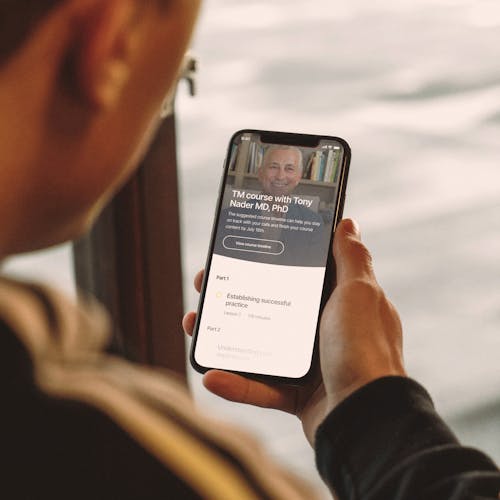
Visit a TM Center once for personalized one-on-one instruction, then complete the following sessions remotely.
Common questions
As a non-profit organization, we’re committed to making the TM technique and its benefits accessible to as many people as possible. To honor this mission, the TM course fee is income-based and can be paid in four installments.
Imagine trying to learn a musical instrument or sport. You know how valuable it is for a good teacher to show you the proper technique. Similarly, individualized instruction by certified TM instructors ensures a personal and intuitive learning experience, allowing students to learn the technique with ease and precision, and to establish a lasting TM practice. There is no other way to learn the authentic TM technique — and there is no evidence that anything else provides the full range of benefits documented in the published research on TM.
The TM technique allows your mind to naturally transcend, or easily settle inward, to quieter and quieter levels of thought, until you experience the most silent and peaceful level of your own awareness.
No problem at all. Unlike other forms of meditation, the TM technique involves no concentration, no control of the mind, no contemplation, no monitoring of thoughts. It is completely effortless.
The TM technique's effectiveness is the same whether you believe it will work or are completely skeptical. That's because it automatically and effortlessly allows your active thinking mind to settle down to a state of deep inner calm.
In mindfulness meditation you monitor your thoughts, feelings, breathing, and bodily sensations, without judging them. This keeps your mind engaged on the active level of thinking, as do many other forms of meditation. What we don’t often realize is that, beneath the active surface, the mind already has a deep level of calm, like the settled depth of the ocean beneath the waves. The Transcendental Meditation technique facilitates transcending – effortlessly opening our awareness to this deeper, peaceful level of the mind.
Maharishi Mahesh Yogi, whose life's work was to revive and demystify the timeless knowledge of meditation, and verify its effectiveness through the lens of modern science, began teaching Transcendental Meditation in the 1950s. After refining and systematizing the teaching of TM, Maharishi began a movement to make the technique available worldwide. He oversaw the training of thousands of instructors and established a non-profit foundation to preserve the authenticity of the TM technique for generations to come.
Find an instructor
There are 170+ TM Centers in the U.S. where you can learn to meditate, and discover a deep inner peace.